Equine Massage
Jill also uses some equine massage techniques as part of her treatment. This helps improve the blood supply to the horse's muscles...
Muscles
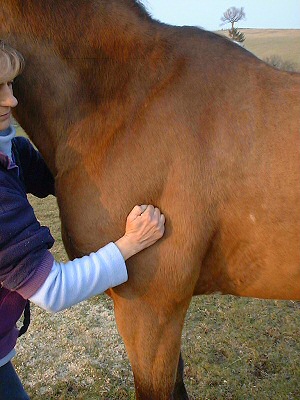
Muscles that are tight or in a contracted state put pressure on surrounding tissues. This causes a decrease in blood circulation, restricted movement, nerve irritation and pain. If not relieved and loosened this tightness can cause more problems and will continue to worsen.
Equine Massage therapy is one of the ways to free up tight muscle tissue and enhance blood circulation.
Equine Massage has many more benefits such as:
- Relaxes muscle spasm
- Improves muscle tone
- Reduces congestion within blood and lymph vessels
- Stimulates or relaxes the nervous system
- Increases excretion of fluids
- Increases the exchange of substances between cells
- Encourages tissue repair
- Stretches connective tissue
- Helps maintain flexibility
- Reduces inflammation of tissue in joints as well as enhances nutritional aspects
- Prevents the formation of adhesions and fibrous bands in muscles, tendons and ligaments
- Increases intestinal movement
- Stimulates glands
- Helps clean pores
Equine Massage... when?
- Horses recovering from lameness and horses with reduced performance may also benefit from equine massage.
- It helps to return the muscles and joints to full flexibility.
- Equine massage is of great benefit to competition horses as part of a warm up programme.
- Is also of enormous benefit after competing when used as part of a warm down programme.
Equine massage can also help:
- Movement
- Topline
- Lameness
- Stiffness
- Relaxation & sleeping
- Longer stride required
- Inflammation of soft tissues
- Keeping older horses active
- Jumping
- Rehabilitation after injury
Contact Jill to discuss your animals' problems and possible solutions.